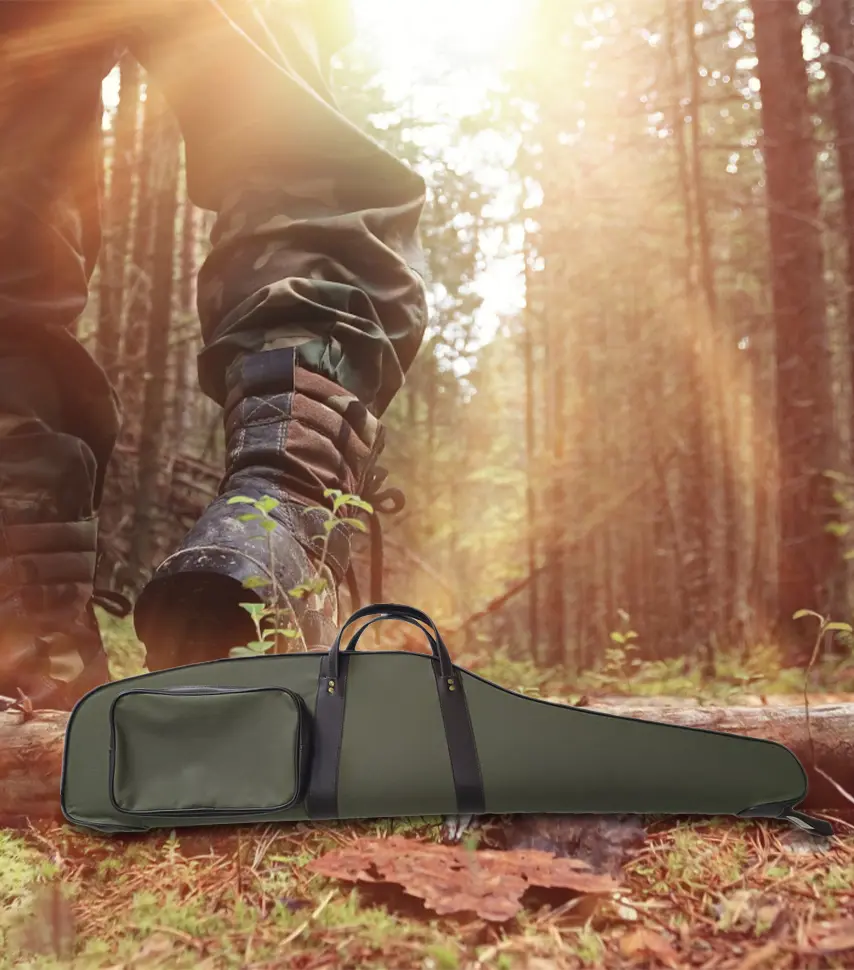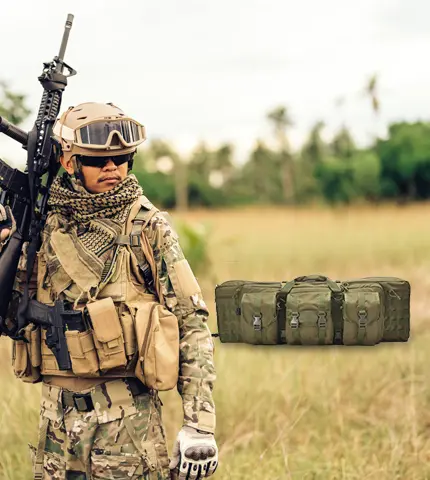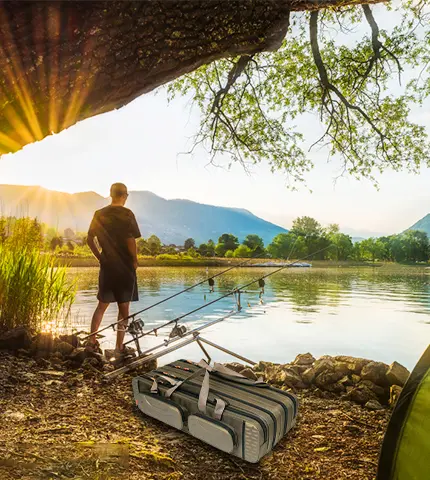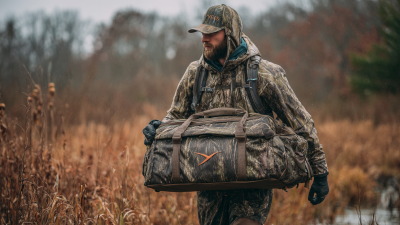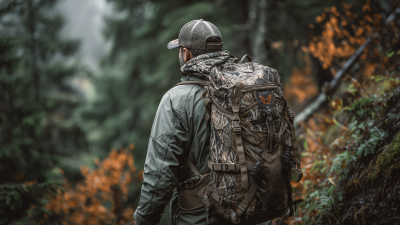
China’s Hunting Saddle Bag manufacturing sector is gaining attention from riders, outfitters, and outdoor brands. The U.S. Fish and Wildlife Service reported 14.4 million hunters in 2022. Their hunting-related spending reached approximately $45.2 billion. This figure shows strong demand for practical, durable field equipment.
Grand View Research’s Outdoor Equipment Market report identifies portability, weather resistance, and long service life as important purchasing factors. These priorities directly affect saddle bag design. A reliable Hunting Saddle Bag should secure binoculars, water bottles, maps, and emergency supplies without shifting during movement. Reinforced stitching, abrasion-resistant fabric, quiet zippers, and adjustable straps matter in real terrain. Small details matter.
Outdoor gear educator Andrew Skurka offers a useful field principle: “The best gear is the gear you actually use.” That idea applies strongly here. A bag may look impressive in a catalog, yet fail when rain enters through an exposed seam. A professional China Hunting Saddle Bag manufacturer should provide material specifications, stitching samples, load testing, and clear OEM communication. Factory inspections and batch records also support dependable quality.
However, product claims require careful review. “Water-resistant” does not always mean waterproof. A larger capacity does not guarantee better balance. This is where suppliers must improve, not merely advertise. Experienced manufacturers can refine pocket placement, saddle compatibility, and weight distribution through field feedback. The strongest supplier combines production expertise with honest testing. That approach helps international buyers choose practical Hunting Saddle Bag solutions with fewer costly surprises.
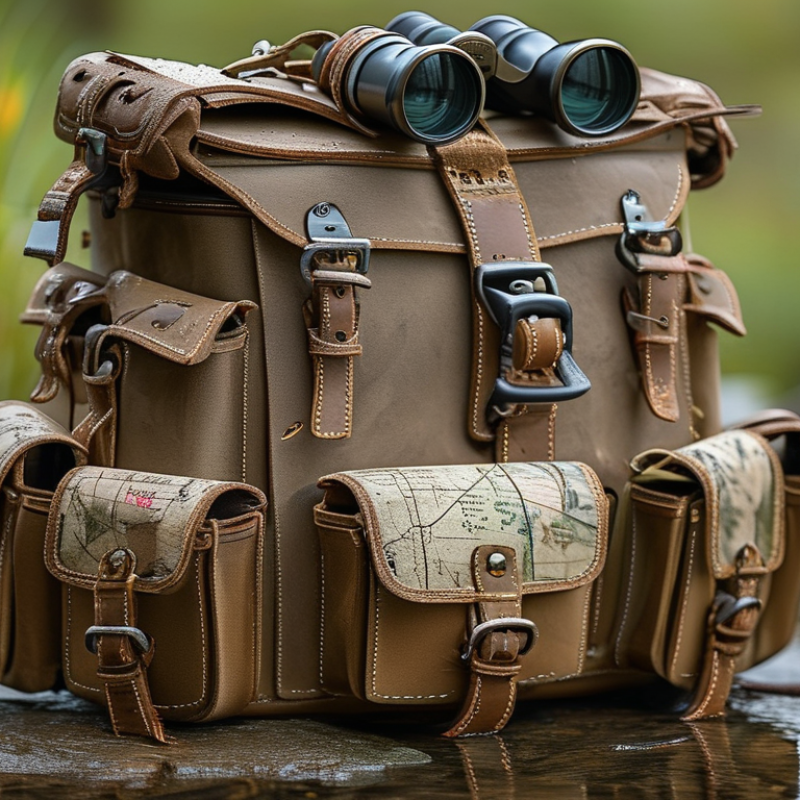
A hunting saddle bag is a compact storage pouch fitted to a saddle, pack frame, or compatible outdoor equipment. It keeps essential items close without filling a jacket or backpack. Typical contents include water, navigation tools, spare layers, snacks, a flashlight, and basic first-aid supplies. The bag should stay quiet, balanced, and reachable while moving through uneven terrain.
The U.S. Fish and Wildlife Service reported 14.4 million American hunters in its 2022 National Survey. The same report recorded 45.2 billion dollars in hunting-related spending. These figures show why dependable field equipment matters. A practical saddle bag needs reinforced stitching, weather-resistant fabric, secure closures, and attachment points that resist shifting. Field testing should check zipper noise, strap strength, and access while wearing gloves. Small details matter.
A useful bag is not simply a larger bag. Too much capacity can encourage unnecessary loading and create uncomfortable movement. Too little space can force tools into unsafe or awkward positions. That balance is easy to miss. Manufacturers and suppliers should test different body sizes, saddle structures, and weather conditions. Materials may also need improvement. Water-resistant fabric protects contents, but it is not always fully waterproof. Clear specifications help buyers choose responsibly and maintain realistic expectations.
A quality hunting saddle bag begins with material choice, not decoration. Field inspections often favor 500D or 1000D nylon for its tear resistance and manageable weight. Heavier fabric can survive thorny brush, but it may feel stiff around the waist. Polyester remains practical for cost-sensitive designs. Textile Exchange’s Materials Market Report 2024 states that polyester made up about 57% of global fiber production in 2023. Recycled options deserve consideration, although coating performance must still be verified.
Construction details decide long-term reliability. Look for reinforced bartack stitching at strap joints, double-layered base panels, and tightly sealed seams. A water-resistant zipper helps during short showers, while a storm flap offers extra protection. The Outdoor Foundation’s 2024 participation report recorded 175.8 million U.S. outdoor participants in 2023. That scale supports demand for adaptable, comfortable carrying systems. A padded waist belt, breathable mesh, and quiet fabric reduce movement and fatigue.
Abrasion testing should follow recognized methods, such as ASTM or ISO procedures, rather than visual inspection alone. Numbers matter. Still, laboratory results cannot fully reproduce wet leaves, mud, and repeated rubbing against equipment. I would avoid making absolute waterproof claims without hydrostatic testing. No material is perfect. Even strong nylon can fail when poor stitching concentrates stress. A dependable supplier should provide fabric specifications, seam construction details, test records, and clear inspection standards before production.
Chinese manufacturers design saddle bags around real outdoor use, not only appearance. Product teams study riding posture, saddle shape, carrying habits, and weather exposure. They often build early samples with canvas, nylon, leather, or coated fabric. These materials help balance strength, weight, and water resistance.
Engineers check pocket access, buckle security, and stitching pressure points. Reinforced seams appear near straps and load-bearing panels. Factories may use bar-tack stitching, edge binding, and controlled heat sealing. Each production batch should pass inspections for dimensions, color, hardware, and fabric defects. Practical suppliers also keep material records and sample approvals. No sample is perfect. A minor alignment error can reveal a weak process before mass production.
Tips: Ask for a pre-production sample, fabric specifications, load-test details, and clear inspection standards. Test the bag with realistic weight. Check whether it stays stable during movement. Request lawful-use documentation when needed. Also review packaging, delivery protection, and communication procedures. Reliable cooperation depends on written details, not promises alone.
Choosing a reliable hunting saddle bag supplier in China requires more than comparing prices. Examine manufacturing experience, material knowledge, and quality controls. A capable supplier should explain fabric strength, water resistance, buckle performance, and stitching methods clearly. Ask how they handle repeated field use, not just factory inspection.
Request detailed product specifications and a pre-production sample. Test the sample with realistic loads, rough movement, rain exposure, and repeated opening. Details matter. Check seam alignment, zipper movement, strap adjustment, and attachment stability. A supplier should provide material records, inspection procedures, and production photos when requested. They should also understand applicable product safety and textile requirements in your target market.
Communication reveals reliability. Confirm lead times, minimum order quantities, packaging, replacement policies, and approval procedures in writing. Ask whether the same materials will remain available during mass production. A small change in webbing or thread can affect durability. Do not rely only on polished samples. Independent inspection can expose uneven stitching or weak hardware before shipment. A common mistake is choosing the lowest quotation too quickly. It may reduce short-term cost, but create fitting complaints later. Even experienced buyers can overlook small defects when schedules become tight. Trust needs evidence, consistent records, and willingness to correct problems.
China Top Hunting Saddle Bag Manufacturer Supplier
Customization should begin with the rider’s real routine, not a generic product sheet. A buyer may need two bottle sleeves, a reinforced rifle attachment, or quieter fabric during movement. We confirm dimensions, load limits, stitching patterns, hardware finish, and logo placement before sampling. Small details matter. A misplaced buckle can rub against a saddle.
The U.S. Bureau of Economic Analysis reported that outdoor recreation generated about 1.1 trillion dollars in 2022. This growth increases demand for equipment that performs beyond showroom appearance. Our quality checks cover fabric weight, seam strength, zipper movement, color consistency, and water resistance. Inspectors measure samples from different production batches. We also use pre-shipment inspections and carton checks. Still, testing is not perfect. Field conditions can expose weaknesses that laboratory checks miss.
Export service must reduce surprises. We prepare commercial invoices, packing lists, carton marks, and product specifications for buyer review. The International Trade Centre’s trade data shows how important cross-border logistics remain for manufactured outdoor goods. We support sampling, production updates, loading photos, and shipment coordination under agreed trade terms. For repeated orders, inspection records help compare batch performance. Some buyers prefer aggressive cost reduction, but thinner webbing may shorten service life. That trade-off deserves an honest discussion before production.
| Data Dimension | Typical Specification or Service | Reference Data | Buyer-Focused Details |
|---|---|---|---|
| Product Application | Hunting saddle bags for equestrian gear, trail rides, camping, and outdoor transport | Designed for attachment to a saddle or pack system | Suitable for carrying small tools, food, first-aid supplies, ammunition cases, and personal equipment |
| Common Bag Dimensions | Compact, medium, and large capacity formats | Approximately 25–45 cm wide, 15–30 cm high, and 10–20 cm deep per compartment | Final dimensions can be adjusted according to saddle clearance, load capacity, and packing requirements |
| Material Options | Polyester, nylon, canvas, and coated fabric | Common fabric weights range from approximately 300D to 1,680D | Higher-denier fabrics generally provide greater abrasion resistance, while lighter fabrics reduce total weight |
| Water Resistance | Water-repellent outer fabric, coated fabric, storm flap, or rain cover | Water-repellent performance depends on fabric coating, seam construction, and closure design | Waterproof zippers, taped seams, and sealed construction can be specified for higher weather protection |
| Structural Support | Foam padding, PE board, reinforced base, or removable internal divider | Typical padding thickness: approximately 3–8 mm | Reinforced bases help reduce sagging and protect contents when the bag is placed on uneven ground |
| Attachment System | Adjustable webbing straps, buckles, hook-and-loop fasteners, and quick-release clips | Common webbing widths: approximately 20–40 mm | Attachment points should be positioned to avoid interference with the rider, saddle hardware, and horse movement |
| Hardware Options | Metal or polymer buckles, D-rings, zipper pulls, snaps, and cord adjusters | Hardware selection is based on load, corrosion exposure, temperature, and target cost | Corrosion-resistant hardware is recommended for humid, wet, or coastal operating environments |
| Closure Design | Zipper, roll-top, flap with buckle, drawcord, or mixed closure | One or more compartments can be configured according to the required access frequency | Flap and roll-top closures provide additional protection from dust and light rain; zippers offer faster access |
| Customization Scope | Size, color, fabric, logo placement, webbing, compartments, labels, and packaging | Custom patterns are commonly prepared using digital artwork or technical drawings | Buyers can request a pre-production sample to confirm fit, appearance, and attachment position |
| Color Matching | Standard color selection or custom color development | Color approval may be based on a physical swatch, color reference, or approved sample | Fabric, webbing, binding, thread, and hardware colors should be reviewed together before bulk production |
| Sewing Quality Control | Inspection of stitch density, seam allowance, thread trimming, bartacks, and reinforcement points | High-load attachment areas commonly require additional reinforcement stitching or bartacks | Critical seams should be checked for skipped stitches, loose threads, puckering, and uneven alignment |
| Dimensional Inspection | Measurement of finished length, width, height, opening, strap length, and compartment size | Inspection tolerance should be agreed in the approved technical specification | Consistent dimensions help ensure repeatable fit across different production batches |
| Functional Testing | Strap adjustment, buckle operation, zipper movement, load simulation, and attachment compatibility | Testing should reflect the intended carrying load and use environment | Samples should be checked while mounted on the intended saddle or a representative fixture |
| Material Inspection | Fabric appearance, color, thickness, coating condition, hardware finish, and accessory count | Incoming materials are commonly checked before cutting and assembly | Material approval records support batch traceability and help reduce color or component variation |
| Pre-Shipment Inspection | Visual, dimensional, workmanship, function, quantity, labeling, and packaging inspection | Inspection can be performed using an agreed sampling plan such as ISO 2859-1 | Inspection criteria and acceptable quality limits should be confirmed before production begins |
| Packaging Options | Individual polybag, recycled paper insert, carton packing, barcode label, and shipping mark | Packaging configuration depends on product size, retail requirements, and transport method | Carton dimensions and gross weight should be confirmed to support freight planning and warehouse handling |
| Export Documentation | Commercial invoice, packing list, transport document, and country-of-origin information | Additional documents may be required by the destination country or buyer’s customs broker | Product descriptions, quantities, weights, and carton information should remain consistent across documents |
| Compliance Support | Material declarations, restricted-substance documentation, labeling review, and test coordination | Requirements vary by destination market and product composition | Buyers should specify the destination country and applicable regulations before material selection |
| Order Planning | Sample approval, material confirmation, bulk production, inspection, and shipment scheduling | Lead time varies with customization level, order quantity, material availability, and season | A written production schedule helps coordinate approval deadlines, inspection dates, and delivery windows |
| Commercial Evaluation | Unit price, tooling or sampling cost, packaging cost, freight basis, and payment terms | Pricing is affected by material, construction, hardware, order volume, and customization | Buyers should compare quotations using the same specification, packaging method, and delivery term |
Specifications shown are common industry reference ranges. Final requirements, testing methods, tolerances, compliance documents, and export terms should be confirmed in the approved purchase specification.