Leave Your Message

How to Choose Hunting Travel Bags in 2026?

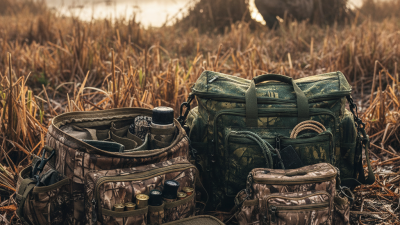
Choosing Hunting Travel Bags in 2026 requires more than comparing size, color, and price. A dependable bag must match the journey, weather, equipment, and transport method. Field experience shows that small design details can prevent major problems. A reinforced base protects gear from wet ground and rough loading. Wide shoulder straps reduce pressure during long walks. Quiet zippers can also make movement less distracting. These features matter.

This guide examines Hunting Travel Bags through practical, evidence-based considerations. We will compare fabric strength, water resistance, compartment design, ventilation, and carrying comfort. A useful hunting bag should organize clothing, optics, food, and other lawful outdoor equipment without becoming awkwardly heavy. It should also meet current airline, transport, and destination requirements. Check those rules before every trip, because policies change.

Real conditions are rarely perfect. Mud enters the seams. Buckles freeze. A carefully chosen bag may still fail after years of hard use. That is worth admitting. Look for repairable parts, dependable stitching, and clear warranty support. Reviews from experienced outdoor users can help, but personal fit remains important. A large bag is not always better. Extra capacity may encourage unnecessary weight and poor balance. The best choice combines protection, comfort, and sensible organization. It supports responsible travel without promising unrealistic performance. Small compromises may remain, and thoughtful buyers should recognize them before leaving home.
How to Choose Hunting Travel Bags in 2026?

Define Hunt Length and Load: 20–40 L for Day Trips, 50–80 L for Expeditions

How to Choose Hunting Travel Bags in 2026?

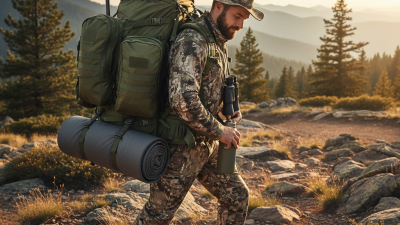
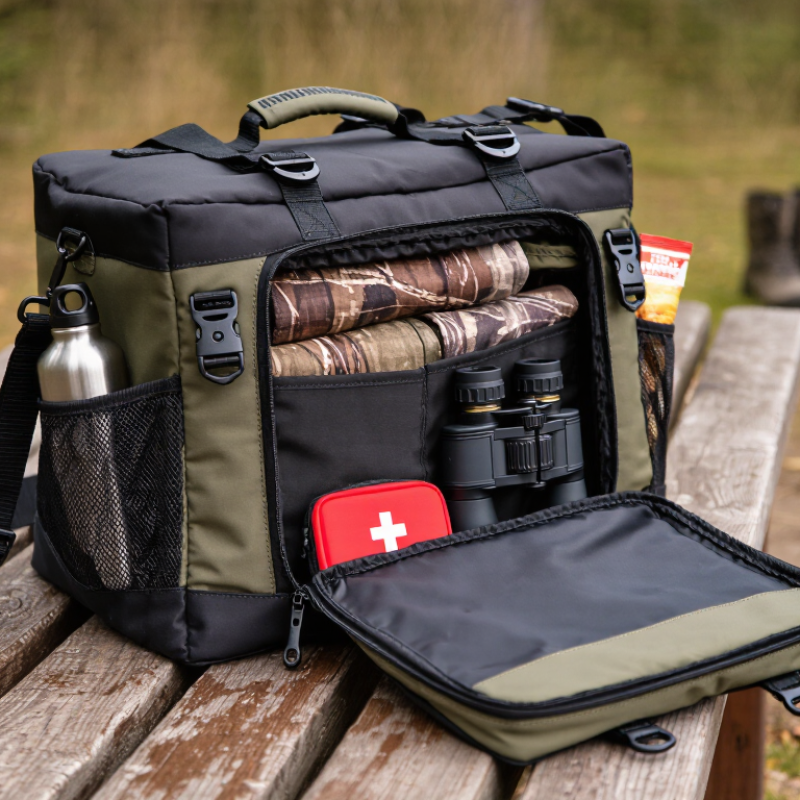
Bag capacity should follow hunt length, not fashion. For a day hunt, 20–40 liters usually handles water, food, rain protection, navigation tools, first-aid supplies, and legally permitted equipment. A 25-liter pack suits mild weather and short approaches. A 40-liter model gives more room for layered clothing and extra food. It still feels manageable through dense brush.

Longer expeditions require 50–80 liters. This range accommodates a sleeping system, shelter, cooking gear, dry clothing, and several days of provisions. The U.S. Fish and Wildlife Service reported 14.4 million American hunters in its 2022 National Survey. That participation level reflects varied terrain and trip styles, so one capacity cannot fit every hunter. Pack volume also changes with climate. Cold conditions demand more insulation and bulk.

Field experience exposes the gap between specifications and reality. My packing lists often underestimate wet clothing. That mistake costs space. The Outdoor Industry Association recorded 175.8 million outdoor recreation participants in 2023, showing how diverse backcountry needs have become. Select a bag with adjustable compression, supportive hip straps, and separate dry storage. Load heavier items close to your back. Test the packed bag before departure, preferably on uneven ground. A perfect capacity does not exist. Your first estimate may be wrong.
How to Choose Hunting Travel Bags in 2026?

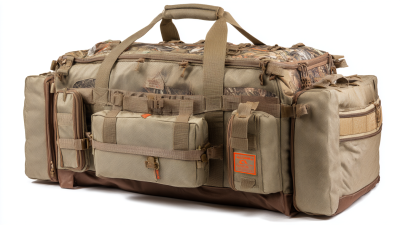
Define your hunt length and load before choosing a bag: 20–40 L is suitable for day trips, while 50–80 L provides the extra capacity needed for multi-day expeditions.

Use the lower end of each range for compact gear and mild conditions. Choose the upper end when carrying extra clothing, food, shelter, optics, or field equipment.

Compare Fabric Strength: 500D–1000D Nylon and Abrasion-Tested Construction

Choosing a hunting travel bag in 2026 starts with fabric strength, not appearance. I usually compare 500D, 700D, and 1000D nylon before checking pockets or colors. Denier describes yarn thickness, but it does not tell the whole story.

A 500D nylon bag can feel lighter and easier to carry through steep terrain. It may suit short trips and organized packing. However, repeated contact with rocks, branches, and truck beds can expose weak panels. A 1000D fabric usually offers stronger abrasion resistance, but it adds weight and may become stiff in cold weather. That trade-off matters.

Construction deserves equal attention. Look for reinforced corners, double-stitched handles, and protected seams. A quality bag should survive controlled abrasion testing, not just a brief showroom inspection. Ask whether the test covered dry fabric, wet fabric, and loaded pressure. Testing details can reveal more than a bold durability claim.

I learned this the hard way. A thick bag still failed where a zipper met a side panel. The fabric was strong, but the stitching was not. Small details matter. Before buying, inspect bar-tacks, zipper tracks, and the base panel. A bag that balances abrasion resistance, manageable weight, and repairable construction is often more practical than the heaviest option. My own preference has changed after carrying overloaded bags for several miles. More material is not always better.

How to Choose Hunting Travel Bags in 2026? - Compare Fabric Strength: 500D–1000D Nylon and Abrasion-Tested Construction

Fabric / Construction Typical Fabric Weight Abrasion-Test Benchmark Tear-Resistance Considerations Water-Resistance Construction Best Use
500D nylon, plain weave Approximately 180–250 g/m², depending on yarn, coating and weave density Use ASTM D3884 or ISO 12947. A practical design target is at least 10,000–25,000 cycles before visible coating failure under a specified test setup. Good weight-to-strength ratio, but cuts can spread if the fabric has no ripstop grid or reinforcement. PU or TPU coating, preferably with protected seams and a water-resistant zipper. Day hunts, lightweight clothing bags and trips where pack weight matters.
500D nylon, ripstop weave Approximately 190–270 g/m² The ripstop grid helps limit tear propagation; abrasion results still depend on face yarn and coating. Test the grid and base cloth together. Better resistance to a small puncture becoming a long tear than comparable plain-weave fabric. Coated inner face plus bound or taped seams provides more reliable weather protection than coating alone. General hunting travel, aircraft luggage and mixed indoor/outdoor handling.
700D nylon, dense weave Approximately 250–330 g/m² A reasonable development target is 25,000–50,000 abrasion cycles, with the exact result reported alongside wheel, load, lubricant and endpoint. Higher yarn mass and fabric density generally improve snag and tear resistance compared with 500D, but stitching remains a critical failure point. PU-coated fabric with seam binding or taping; a raised base panel helps keep wet ground away from seams. A balanced choice for frequent travel, rough vehicle storage and heavier hunting equipment.
700D nylon, reinforced panels Approximately 280–380 g/m² for the complete panel system Place abrasion-resistant fabric on the base, corners and contact zones; verify those panels separately using the same test method. Layered panels, bar-tacked stress points and folded seam allowances reduce damage from concentrated loads. Water-resistant main body plus a coated or molded base; drainage hardware can prevent water pooling. Rugged duffels, modular hunting luggage and bags frequently dragged over rock or soil.
1000D nylon, heavy weave Approximately 300–450 g/m² Commonly selected for high-contact areas; a useful target is at least 50,000 cycles, but results are not comparable without identical test conditions. Strong against scuffing and puncture, though a heavy fabric can still fail at an overloaded seam or zipper opening. PU or TPU coating, sealed seams and a water-resistant closure are needed for meaningful weather protection. Repeated expeditions, abrasive terrain, heavy tools and equipment bags placed on rough surfaces.
1000D nylon with replaceable base panel Approximately 350–500 g/m² for the full construction Test the base, corners, webbing and seam transitions individually; the weakest component determines real-world durability. Replaceable or doubled base panels extend service life when abrasion is concentrated in one area. A coated base, elevated seams and sealed needle holes provide better ground-contact protection than a single fabric layer. Long-distance travel, repeated loading and field conditions where repairability is important.
How to Compare Test Results
  • Confirm the abrasion standard, abrasive wheel or fabric, applied load, speed and failure endpoint. A cycle count without these details is not a reliable comparison.
  • Check the complete bag construction, not only the fabric label: seam strength, zipper durability, webbing attachment, corner reinforcement and base design often determine service life.
  • Denier describes yarn linear density, not a guaranteed strength rating. Two fabrics with the same denier can perform differently because of weave, coating, yarn type and finishing.
  • Fabric weights and abrasion targets shown above are practical industry ranges and development benchmarks; the actual result must be confirmed by a documented laboratory test for the finished material or bag.

Evaluate Weather Protection Using IEC 60529 IPX Ratings and Seam Design

How to Choose Hunting Travel Bags in 2026?

Weather protection deserves more than a waterproof label. Check the bag’s IEC 60529 IPX rating and ask what was actually tested. IPX4 resists splashing water, while IPX5 handles water jets. IPX6 offers stronger jet protection. IPX7 covers temporary immersion, usually up to one metre for 30 minutes. IPX8 involves deeper or longer immersion under stated conditions. Read those conditions carefully. An IPX8 rating is not automatically better for every journey.

I inspect seams before buying. Look for welded seams, fully taped stitching, or tightly bound edges. A needle-punched seam can become a leak path when rain presses against the fabric. Zippers also need protection. A covered zipper, storm flap, or water-resistant construction helps during sudden showers. I once trusted a high rating but ignored the zipper design. The contents stayed dry briefly, then dampness appeared around the opening.

Field use exposes weaknesses that laboratory tests may not show. Place the bag on wet ground and examine its base, corners, and compression points. Check whether straps pull against sealed seams. Test the closure with gloved hands. Small gaps matter.

IPX testing usually focuses on water entry into an enclosure, not long-term abrasion, repeated folding, or muddy handling. Ask for test documentation, not only printed claims. A higher rating can add weight, stiffness, and cost, which may reduce comfort during long walks. That trade-off deserves honest consideration.

Check Fit, Load Support, and Weight Distribution for Safe Field Carrying

How to Choose Hunting Travel Bags in 2026?

A good field bag should fit your torso, not simply your gear. Adjust the shoulder straps, hip belt, and sternum strap while wearing your usual layers. The hip belt should carry much of the weight without pinching. Your back should feel supported, not compressed. I once chose a bag by volume alone, and the result was poor balance. A smaller, well-fitted bag carried better than a larger one.

Tips: Load heavy items close to your spine and between your shoulders. Keep lighter equipment near the outer panels. Test the bag with realistic weight before traveling. Walk, bend, and climb a few steps. Notice movement, pressure points, and shifting contents. If the bag pulls backward, adjust the load before adding more gear.

Weight distribution matters throughout a long day. Place frequently used items in reachable pockets, but avoid overloading one side. Durable fabric helps, yet strength can add unnecessary weight. Check zippers, stitching, frame support, and padding with your hands. These details reveal more than product photos. My own fitting method still needs refinement, especially when clothing layers change. A bag that feels comfortable indoors may behave differently on uneven ground. Test it outside when possible.

Verify Airline Limits: Keep Packed Gear Within the 158 cm Linear Dimension Rule

When choosing hunting travel bags in 2026, verify the airline’s current baggage limits before buying. The 158 cm linear rule means length, width, and height added together. A bag measuring 75 × 45 × 35 cm totals 155 cm, leaving only three centimeters of tolerance. Measure the outside points, including wheels, handles, and bulging pockets. Small details matter.

IATA baggage guidance explains that airlines set their own size and weight conditions, so the 158 cm limit is common, not guaranteed. Check the operating carrier’s baggage chart and fare rules. Do this for every flight segment. SITA’s 2024 Baggage IT Insights report recorded 6.9 mishandled bags per 1,000 passengers in 2023. Compact, clearly labeled luggage may reduce handling pressure, although no bag design guarantees safe arrival.

Use a soft-sided case only when its loaded shape stays controlled. I once underestimated side pockets. That mistake added several centimeters. A rigid frame can protect optics and tools, but it may waste usable space. Keep dense equipment centered, cushion fragile items, and leave room for inspection. Weigh the packed bag at home, then measure it again after adding outer straps. Airline staff may apply different procedures, and online charts can change. Check them shortly before departure.