Leave Your Message

How to Choose Tactical Bags for Global Sourcing?

Choosing Tactical Bags for global sourcing requires more than comparing fabric weights and wholesale prices. Buyers must examine use cases, supply reliability, product safety, and documented compliance. Grand View Research identifies continued growth in the broader tactical gear market, supported by demand for durable outdoor, work, emergency-response, and public-service equipment. However, market estimates vary because “tactical” lacks one universal product definition.

That ambiguity matters. A compact 20-liter nylon pack may suit field technicians, while a 40-liter reinforced bag may better support disaster-response teams. Buyers should compare denier ratings, stitching density, zipper performance, load-bearing tests, and abrasion resistance. The American Society for Testing and Materials publishes relevant textile and performance-testing standards, although no single standard validates every Tactical Bags design. Materials should also be checked for restricted chemicals, labeling accuracy, and responsible factory practices.

Reliable sourcing depends on evidence. The International Trade Centre and UN Comtrade provide trade data that can help buyers review supplier countries, import trends, and product classifications. The OECD Due Diligence Guidance also encourages risk-based checks across supply chains. Factory audits, sample inspections, production photographs, and third-party laboratory reports should support supplier claims. Do not trust impressive specifications alone.

No checklist is flawless. Product names can mislead. A bag that survives a showroom demonstration may fail after months of rain, abrasion, and overloaded transport. Global buyers should therefore request realistic samples, define acceptance criteria, confirm ethical production, and document corrective actions. The best choice balances durability, lawful civilian use, cost, delivery consistency, and measurable quality rather than appearance alone.
How to Choose Tactical Bags for Global Sourcing?

Define the Mission and Operating Environment

How to Choose Tactical Bags for Global Sourcing?

Define the mission before comparing fabrics, pockets, or prices. Start there. A commuter kit needs different protection than a field maintenance load. Record the carried weight, access frequency, weather exposure, and transport method. A 20-liter bag may suit short urban movement, while remote work often demands stronger compression control and repairable components. The mission should decide capacity, not a supplier’s standard catalog.

Operating conditions can change the specification quickly. The UN World Urbanization Prospects projects that 68% of the global population will live in urban areas by 2050. Urban sourcing may prioritize discreet profiles, narrow dimensions, and quick access. Rural or humid regions require drainage, abrasion resistance, and fabric stability. The World Bank’s 2023 Logistics Performance Index measures six areas, including tracking and timeliness. That framework supports practical questions about handling, storage, and delivery reliability. It is more useful than assuming one “global” design fits every route.

Material claims need verification. Request test methods for abrasion, colorfastness, seam strength, and water resistance. Standards such as ASTM D3884 and ISO 105-C06 can make supplier comparisons clearer. Yet laboratory results do not perfectly predict field behavior. I have seen specifications become too ambitious, adding weight and cost without improving the mission. Sample testing should include loaded carry trials, wet handling, zipper operation, and repeated packing. Leave room for revision. Real users often expose weaknesses that spreadsheets miss.
Match Bag Types to Users and Carry Requirements

How to Choose Tactical Bags for Global Sourcing?

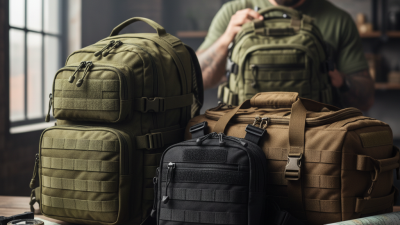
Match the bag to the user, not the photograph. Field technicians often need a 20–30-liter daypack for tools, documents, water, and a light jacket. Commuters may prefer a slimmer 15–20-liter pack with a padded laptop sleeve. Larger 40–60-liter designs suit mobile crews carrying clothing and equipment for several days. But more capacity can encourage overpacking.

The wider backpack market reached about USD 20.9 billion in 2023, according to Grand View Research’s 2024 market report. That scale shows strong demand, but it does not prove every user needs a larger bag. Real-world trials matter. Ask workers to walk, bend, and sit with a loaded sample. Watch shoulder pressure and zipper access. Small details become expensive problems.

For global sourcing, request load-test results, fabric specifications, stitching records, and water-resistance measurements. The American Society for Testing and Materials publishes relevant textile and performance test methods, which can improve supplier comparisons. Use centimeters and liters, not vague terms like “big” or “heavy-duty.” I also recommend checking carry-on compatibility by destination, because airline limits differ. A mistake here can make a practical bag inconvenient. My own sourcing reviews sometimes favored extra pockets, yet users often ignored them. Fewer compartments may work better.

How to Choose Tactical Bags for Global Sourcing? - Match Bag Types to Users and Carry Requirements

Bag Type Primary Users Typical Capacity Recommended Carry Requirements Common Materials Useful Features Approximate Empty Weight Global Sourcing Checks
Compact Utility Pouch Technicians, outdoor users, emergency responders, maintenance personnel 1–4 L Small tools, first-aid supplies, batteries, cables, documents, or personal accessories Polyester or nylon fabric, mesh, webbing, molded plastic or foam reinforcement Zip closure, belt loops, attachment points, internal elastic loops, drainage eyelet Approximately 0.1–0.3 kg Check zipper cycle performance, stitching at belt loops, fabric abrasion resistance, and attachment compatibility
Sling or Crossbody Bag Commuters, photographers, travelers, field staff, event personnel 4–10 L Light daily carry with quick access; suitable for a tablet, compact camera, phone, wallet, and small accessories Coated nylon or polyester, spacer mesh, foam padding, adjustable webbing Ambidextrous strap adjustment, quick-release buckle, concealed pocket, padded divider Approximately 0.3–0.7 kg Evaluate strap comfort, buckle strength, load balance, coating consistency, and left/right shoulder usability
Daypack Students, commuters, hikers, security personnel, field-service workers 15–25 L Daily essentials, water bottle, clothing layer, notebook, compact electronics, and light tools High-density nylon or polyester, foam back panel, padded shoulder straps, webbing Laptop sleeve, organizer panel, sternum strap, side pockets, compression straps Approximately 0.6–1.2 kg Check shoulder-strap bartacks, back-panel ventilation, seam alignment, laptop sleeve dimensions, and colorfastness
Assault-Style Backpack Outdoor users, trainers, field teams, security and emergency personnel 20–35 L Long day missions requiring clothing, hydration, food, communications equipment, and compact tools Woven nylon or polyester, reinforced base fabric, foam padding, heavy-duty webbing External modular attachment panels, hydration sleeve, compression straps, reinforced grab handle Approximately 0.9–1.8 kg Test attachment-panel stitching, shoulder harness load distribution, hydration-tube routing, and base abrasion resistance
Three-Day Pack Travelers, expedition users, disaster-response teams, outdoor professionals 35–55 L Multi-day clothing, sleeping equipment, food, water, medical supplies, and personal equipment Heavy woven nylon or polyester, padded framesheet, aluminum or polymer stays, reinforced webbing Adjustable torso system, padded hip belt, load lifters, top and front access, rain cover compartment Approximately 1.4–2.5 kg Verify torso-size adjustment range, hip-belt transfer, frame stiffness, seam sealing where applicable, and packed-load comfort
Duffel Bag Travelers, sports users, work crews, rescue and logistics teams 30–100 L Bulky clothing, footwear, protective equipment, sports gear, or grouped supplies Coated polyester or nylon, reinforced base, webbing handles, synthetic leather or rubberized panels Wide opening, detachable shoulder strap, end handles, shoe compartment, compression straps Approximately 0.8–2.0 kg Check handle-to-body reinforcement, zipper length, base durability, shoulder-strap padding, and folded-pack volume
Medical or First-Response Bag First-aid teams, clinics, rescue personnel, workplace responders 15–45 L Organized transport of dressings, diagnostic tools, protective equipment, and emergency supplies Coated polyester or nylon, wipe-clean lining, foam structure, transparent mesh pockets Color-coded compartments, removable pouches, wide opening, reinforced base, document sleeve Approximately 0.8–2.0 kg Assess cleanability, lining resistance to common disinfectants, compartment labeling, zipper access, and material odor
Equipment or Camera Pack Photographers, surveyors, technicians, content teams, field researchers 20–40 L Fragile equipment requiring impact protection, internal organization, and controlled access Nylon or polyester outer fabric, closed-cell foam, molded dividers, water-resistant lining Customizable dividers, padded laptop compartment, tripod attachment, quick-access panel Approximately 1.2–2.4 kg Check foam recovery, divider adhesion, hardware noise, access-panel durability, and protection after repeated handling
Hydration Pack Runners, cyclists, hikers, patrol users, outdoor workers 5–15 L Hands-free water access with limited space for food, clothing, navigation tools, and personal items Lightweight nylon or polyester, spacer mesh, insulated hose sleeve, food-contact water reservoir Reservoir compartment, hose routing, sternum strap, reflective details, low-profile shape Approximately 0.3–0.8 kg, excluding water Test reservoir leakage, hose connection, bite valve hygiene, strap stability, and compatibility with local food-contact requirements
Rolling Equipment Case Technicians, mobile teams, event crews, transport operators 35–100 L Heavy tools or equipment that should be moved on smooth surfaces rather than carried over distance Ballistic-style textile or molded polymer shell, aluminum or polymer frame, reinforced wheels Telescopic handle, wheel housing, padded compartments, lockable zippers, replaceable panels Approximately 3–7 kg Check wheel rolling noise, handle wobble, corner impact resistance, wheel replacement availability, and dimensional shipping limits
Water-Resistant Document Bag Inspectors, travelers, field administrators, logistics personnel 5–15 L Documents, maps, certificates, tablets, writing tools, and small electronics requiring weather protection Coated fabric, laminated textile, water-resistant zipper or roll-top closure, foam insert Document sleeves, tablet divider, carry handle, shoulder strap, internal key clip Approximately 0.3–0.9 kg Define the target water-resistance test, inspect coating adhesion, confirm paper-size compatibility, and test closure operation

Capacity and empty-weight figures are practical industry ranges. Final specifications should be confirmed through a prototype, dimensional inspection, material testing, and packed-load evaluation before bulk production.

Evaluate Materials, Construction, and Weather Resistance

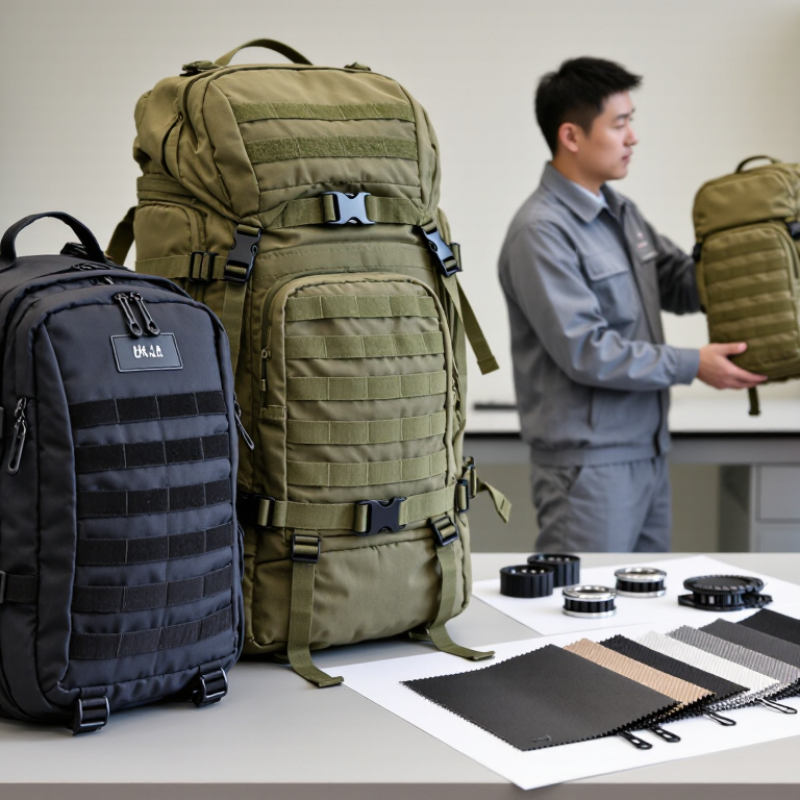
When choosing tactical bags for global sourcing, examine the material before admiring the design. Nylon and polyester offer different balances of abrasion resistance, weight, and cost. Dense fabric usually feels firmer and holds its shape better. However, stiffness can reduce comfort during long carrying periods. Request fabric weight, weave details, coating type, and colorfastness results from suppliers. Do not accept “waterproof” as a complete specification. Ask how the claim was tested.

Construction often decides whether a bag survives real use. Inspect bar-tack stitching around handles, shoulder straps, and compression points. Thread should remain even, without loose loops or skipped stitches. Zippers need smooth movement and protective flaps, especially near the main opening. Check whether the lining is securely joined at corners. A sample may look excellent, yet hidden seams can fail after repeated loading. I have learned that attractive prototypes sometimes conceal weak reinforcement.

Tips: Place a sample under controlled rain, then inspect the interior and seams. Test packed weight through repeated lifting and short drops. Rub the fabric against rough surfaces to reveal early abrasion. Compare several production samples, not only one. Ask for test records, but verify important claims independently when possible. Weather resistance also depends on closure design, drainage, and maintenance instructions. No coating lasts forever. That limitation should appear clearly in the sourcing specification.

Check Features, Compliance, and Supplier Capabilities

How to Choose Tactical Bags for Global Sourcing?

A reliable tactical bag starts with practical features, not aggressive styling. Check fabric denier, stitching density, zipper performance, and load-bearing points. A filled bag should remain balanced when carried for several hours. Inspect shoulder padding, back ventilation, and adjustment ranges on different body sizes. Modular attachment panels can add value, but excessive webbing may increase weight and production cost. Water resistance also needs evidence, such as coating specifications and test results. Marketing language alone is not enough.

Compliance deserves equal attention. Ask whether materials meet the destination market’s chemical, labeling, flammability, and packaging requirements. Request current laboratory reports, material declarations, and traceable production records. Reports should match the exact fabric, lining, buckle, and color being ordered. Supplier capability matters too. Review factory equipment, quality-control procedures, sample approval methods, and monthly capacity. A capable supplier should explain defect handling clearly and accept reasonable pre-shipment inspections. The process is rarely perfect. I still recheck documents because old reports can create expensive misunderstandings.

Tips: Send a detailed specification sheet with measurements, tolerances, photos, and packing instructions. Order samples from more than one supplier. Test them with realistic weight, rain exposure, and repeated opening. Compare results, not promises. Ask who controls subcontracted processes. Keep a written approval record. Small details matter.

Compare Samples, Costs, and Global Sourcing Risks

How to Choose Tactical Bags for Global Sourcing?

Compare Samples, Costs, and Global Sourcing Risks

A useful sample should be tested, not merely photographed. I fill each compartment with training gear, then check stitching, zippers, handles, and weight balance. I also measure the bag after packing, because listed dimensions can be optimistic. Small details matter. A loose thread may signal weak quality control.

Cost comparison requires more than the factory price. I calculate materials, sampling fees, packaging, freight, duties, inspections, and possible rework. One supplier once offered a cheaper quote, but its minimum order was too high for our forecast. The final unit cost became worse. Ask for a clear cost sheet. Confirm which materials and construction methods are included.

Global sourcing risks need practical checks. Request production photos, test reports, material declarations, and sample records. A factory audit can reveal crowded work areas, inconsistent labeling, or poor storage conditions. Verify capacity before accepting a large order. Delays may come from holidays, port congestion, or unavailable hardware. Build time into the plan. Do not assume every report is current. I have trusted an old inspection document before, and that decision caused avoidable rechecking. Requirements also vary by destination, so review applicable safety, labeling, environmental, and import rules with qualified local professionals. A strong supplier communicates problems early, even when the answer is inconvenient. That behavior is worth measuring.

How to Choose Tactical Bags for Global Sourcing?

Compare indicative sample costs, bulk unit costs, and global sourcing risk before selecting a tactical bag category.

Sample and bulk costs are indicative USD planning benchmarks for standard nylon tactical bags. Risk scores consider material complexity, hardware requirements, customization difficulty, quality-control sensitivity, and international logistics exposure.