10 Best Hunting Sleeping Bags for Cold Weather?
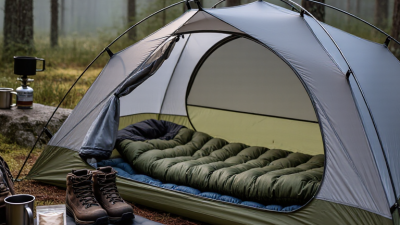
Cold-weather hunting often begins before sunrise and ends after the temperature drops. A reliable Hunting Sleeping Bag can help you rest through long nights in a tent, cabin, or sheltered camp. But warmth is only part of the decision. Weight, packed size, insulation, and room to move all matter when your gear must travel with you.
This guide considers ten sleeping bags suited to cold-weather hunting, with attention to practical details such as hood shape, zipper design, and draft protection. A temperature rating offers a useful comparison, not a promise of comfort. Wind, moisture, clothing, fatigue, and your sleeping pad can all change how warm a night feels. Small details count.
Think about the conditions you actually expect. A bulky bag may feel reassuring at camp, yet become frustrating on a long approach. A lighter model may pack neatly but leave little room for extra layers. There is no perfect choice for every hunter, and product specifications cannot predict every night outdoors. That uncertainty deserves a little humility. Use the comparisons as a starting point, then check current manufacturer guidance and match the bag to your climate, sleep habits, and other insulation.
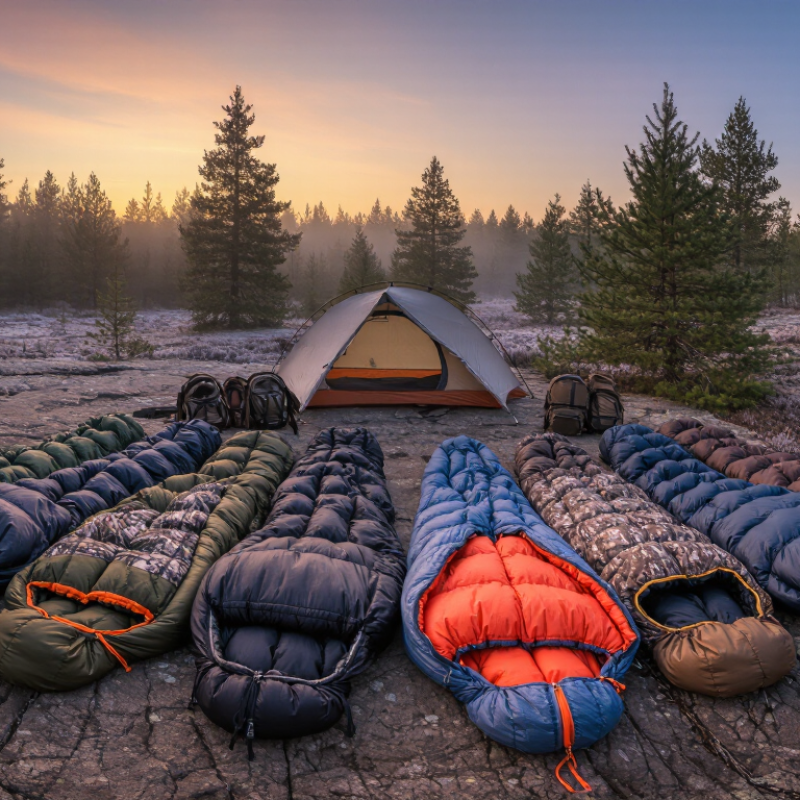
How ISO 23537-1:2022 Comfort, Limit, and Extreme Ratings Classify Cold-Weather Bags
ISO 23537-1:2022 gives sleeping bags three temperature ratings: Comfort, Limit, and Extreme. They come from standardized laboratory testing, not a guarantee of warmth on every hunt. Comfort estimates the temperature at which a standard woman can sleep comfortably in a relaxed position. Limit estimates when a standard man may sleep curled up without feeling excessively cold. These are reference points, not personal predictions.
Extreme is often misunderstood. It describes a survival threshold under test conditions, where cold injury remains a serious risk; it is not a temperature for planned sleep. Treating it as a safe target would be a poor choice. In a hunting camp, damp base layers, wind exposure, fatigue, and a thin sleeping pad can all change how warm a bag feels. So can metabolism and fit. A bag that feels roomy may leave extra air to warm, while a tight fit can compress insulation. Small details matter.
For cold-weather selection, compare the Comfort rating with the lowest temperature you realistically expect, then consider your pad and sleep clothing. Leave a margin. The laboratory figure is useful, but field judgment still matters, and honestly, that judgment can be imperfect. Check the rating label and test standard, then weigh them against your own cold-sleeping experience.
Compare 10 Hunting Bags by Standardized Temperature Ratings and Insulation Type
To compare ten hunting sleeping bags fairly, use temperature ratings tested under the same standard. ISO 23537-1:2022 specifies thermal-manikin testing for adult sleeping bags. Its comfort, limit, and extreme ratings describe different conditions, not three interchangeable promises. Comfort generally reflects a standard woman sleeping at ease; limit reflects a standard man curled up. Extreme is an emergency benchmark, not a sensible target for a planned night outdoors. Check the test standard beside each rating.
Small detail. Big difference.
Compare insulation type separately from temperature. Down usually provides strong warmth for its packed weight, while synthetic insulation often handles damp conditions better. Neither is automatically warmer: construction, fit, and loft matter. The International Down and Feather Laboratory’s fill-power testing measures down’s loft under defined conditions, but fill power alone cannot establish a bag’s temperature rating.
For each bag, record the standardized rating, insulation type, fill power if listed, and intended fit. Also check the hood, draft collar, and sleeping-pad setup; a cold spot beneath your hips can undo a reassuring label.
Ratings help, but they cannot account for every wet tent or exhausted hunter. I’d treat the chart as a comparison tool, not a guarantee.
Evaluate Down Fill Power in in³/oz and Synthetic Insulation for Damp Conditions
When comparing cold-weather hunting bags, read down fill power as loft volume per ounce, usually written in³/oz. An 800 in³/oz down has more loft per ounce than 600 in³/oz down, which can mean less packed bulk. Numbers need context. Fill weight, baffle design, fit, and a credible temperature rating also shape warmth. A high fill-power figure is not a warmth guarantee; treating it as one is an easy mistake.
For dry, settled cold, down offers strong warmth for its weight and compresses neatly into a pack. Yet moisture changes the decision. Condensation inside a shelter, damp clothing, or melting snow can reduce down’s loft and make drying difficult. Synthetic insulation generally keeps more insulating ability when damp and dries faster, though it is often heavier and bulkier for similar warmth. The trade-off is real.
Look at the conditions you actually expect, not just the lowest number on a rating label. If your route includes wet brush or repeated nights in a humid tent, synthetic insulation may be the more forgiving choice. In reliably dry cold, high-loft down can save space and weight. Check the bag’s fill amount and construction, and leave room for insulating clothing without compressing the loft. Ratings are useful, but individual comfort varies; I would avoid relying on one test value alone.
Compare Weight, Packed Volume, Fit, and Materials for Backcountry Hunts
For a cold-weather hunt, a sleeping bag must balance warmth with the weight carried between camps. Compare each option by its comfort temperature rating, total weight, and packed volume, not by its lowest advertised temperature alone. A compact bag can free space for food and spare layers. But if it is too heavy, every climb feels longer. Small differences matter.
Down insulation usually compresses well and offers strong warmth for its weight, but dampness can reduce its performance. Synthetic fill often handles moisture better and may dry faster, though it can take up more room. Check shell fabric, lining, and construction too. Durable materials can resist rough ground, yet extra reinforcement may add weight. No material is perfect.
Fit deserves a close look. A bag should leave enough space to move your feet and wear dry base layers, without leaving a large pocket of cold air. Check shoulder and foot-box measurements against your build. I would not choose solely by the smallest packed size; a cramped night can cost comfort and rest. Also consider the sleeping pad, since insulation beneath you is compressed. That trade-off is easy to underestimate.
Match ISO-Tested Ratings to Expected Temperatures and Personal Sleep Systems
Choose a bag by its ISO comfort rating, not its most dramatic temperature claim. ISO 23537-1:2022 sets standardized thermal-manikin tests for sleeping-bag temperature ratings. The comfort value is a useful starting point; the lower-limit value is not a promise that every sleeper will stay warm. Cold nights expose gaps. Wind, damp clothing, fatigue, and individual metabolism can all change how warm you feel.
Treat the bag and sleeping pad as one sleep system. ASTM F3340-18 specifies a laboratory method for measuring pad R-value, a measure of thermal resistance. A thin pad can undermine a well-rated bag when cold ground pulls heat away. Check expected overnight lows, then allow a buffer for changing weather and your own cold sensitivity. I still find this easy to misjudge: a calm evening at camp can turn sharply colder before dawn.
Tips: Compare the ISO comfort rating with forecast lows, then check the pad’s stated R-value. Wear dry base layers, keep spare clothing inside the bag, and protect insulation from moisture. Ratings are useful evidence, not guarantees. A simple thermometer near camp can help you notice when your planning assumptions were off.
10 Best Hunting Sleeping Bags for Cold Weather? — Match ISO-Tested Ratings to Expected Temperatures and Personal Sleep Systems
These are ten brand-neutral hunting-use profiles, not claims about specific bag models or independent product-test results. Temperature targets are practical selection guidance: choose an ISO/EN 23537 comfort rating at or below the expected overnight low, with extra margin if you sleep cold or conditions are uncertain. The ISO lower-limit rating is not a comfort-temperature guarantee; check both published ratings on an individual bag.
| No. |
Hunting Use Case |
Expected Overnight Low |
Suggested ISO Comfort Rating |
Personal Sleep-System Considerations |
| 1 |
Warm-weather, low-elevation hunt |
10°C / 50°F |
10°C / 50°F or lower |
A lightweight bag may suit mild forecasts. Use an insulated sleeping pad appropriate to the ground temperature; a liner can help with comfort and cleanliness. |
| 2 |
Cool early-season camp |
8°C / 46°F |
5°C / 41°F or lower |
Allow a modest temperature buffer for damp clothing, wind exposure, and forecast variation. Keep dry sleep layers reserved for camp. |
| 3 |
Cool nights at a high-elevation camp |
5°C / 41°F |
0°C / 32°F or lower |
Pair the bag with a well-insulated pad and shelter that limits drafts. A warm hat and dry base layer can improve comfort but do not replace adequate insulation. |
| 4 |
Near-freezing shoulder-season hunt |
2°C / 36°F |
-3°C / 27°F or lower |
Check the pad’s stated insulation performance as well as the bag rating. Cold ground can make an otherwise suitable bag feel inadequate. |
| 5 |
Freezing overnight temperatures |
0°C / 32°F |
-5°C / 23°F or lower |
Use a pad designed for cold conditions and ventilate the shelter to manage condensation. Avoid relying on ordinary clothing as the only added insulation. |
| 6 |
Cold autumn backcountry camp |
-5°C / 23°F |
-10°C / 14°F or lower |
A colder-rated comfort target offers useful margin. Store the bag dry and protect it from ground moisture; damp insulation can lose warmth. |
| 7 |
Subfreezing late-season hunt |
-10°C / 14°F |
-15°C / 5°F or lower |
Consider your personal cold sensitivity, fatigue, and food intake when choosing a margin. A properly insulated pad and dry sleep clothing are essential parts of the system. |
| 8 |
Severe cold in exposed terrain |
-15°C / 5°F |
-20°C / -4°F or lower |
Use a cold-weather shelter and pad, and keep the bag protected from snow and condensation. Confirm that the published test rating applies to the exact bag configuration. |
| 9 |
Very cold winter bivouac |
-20°C / -4°F |
-25°C / -13°F or lower |
Choose a system with a substantial safety margin if forecasts are uncertain or you are a cold sleeper. Test the complete sleep setup before relying on it in remote conditions. |
| 10 |
Extreme-cold expedition-style camp |
-25°C / -13°F |
-30°C / -22°F or lower |
Use a complete, purpose-selected extreme-cold system, including suitable ground insulation and weather protection. Seek a lower comfort rating for cold sensitivity or uncertain conditions. |



 Hunting And Shooting Bag LSH
 Tactical Military Bag & Vest LST
 Archery Bag LSC
 Fishing Bag LSF
 Others LSB