Leave Your Message

What Is a Hunting Pee Bag and How Does It Work?

A Hunting Pee Bag is a compact, sealable container designed for urination during remote hunting trips. It can reduce unnecessary movement, protect privacy, and help hunters remain focused during long sits. The basic system is simple. A wide opening receives urine, while a leak-resistant body stores it temporarily. Some models include absorbent gel, odor control, or a reinforced closure.

Randy Newberg, a respected hunting educator, expresses the broader outdoor ethic this way: “Respect the land, and it will continue to provide.” A Hunting Pee Bag supports that principle when used thoughtfully. It can prevent urine from reaching sleeping areas, gear, sensitive vegetation, or heavily visited campsites. The bag should be opened carefully, held upright, and sealed immediately after use. Small details matter.

Cold mornings expose weaknesses. Plastic can stiffen, gloves reduce grip, and a rushed seal may fail. That part is easy to underestimate. Hunters should test the bag at home, check its capacity, and carry a second leak-proof layer. Absorbent products may reduce sloshing, but they do not make careless disposal acceptable. Used bags belong in a durable waste container and should leave the backcountry with the hunter.

This guide examines how a Hunting Pee Bag works, which materials improve reliability, and where common designs fall short. It also considers hygiene, odor management, storage, and responsible field practices. No product is perfect. A practical system is the one you can operate safely, quietly, and without creating another problem for the landscape.
What Is a Hunting Pee Bag and How Does It Work?

Definition and Purpose: A Hunting Pee Bag for Field Urination

A hunting pee bag is a portable container for urination when leaving a hunting position is unsafe, impractical, or disruptive. Its purpose is straightforward: reduce movement, preserve privacy, and contain liquid until proper disposal. Most models use a wide opening, leak-resistant lining, absorbent gel, and a secure closure. The gel converts liquid into a less mobile mass, which helps reduce spills during transport. It is a sanitation tool, not a replacement for careful planning.

The U.S. Fish and Wildlife Service’s 2022 National Survey reported 14.4 million hunting participants in the United States. The Outdoor Foundation’s 2024 Outdoor Participation Trends Report also recorded 175.8 million outdoor recreation participants. These reports do not measure pee-bag use. They do show why compact field sanitation equipment deserves practical attention. A small container can matter during long sits, freezing weather, mobility limitations, or dense cover. Those details are easy to underestimate.

Use requires a stable stance, a complete seal, and a separate storage pouch. Practice at home first. It exposes awkward openings and weak closures before a remote hunt. I would not call any bag foolproof. Check seams before departure, keep it upright, and avoid overfilling. Follow local land rules for disposal, because some areas require carrying used bags out. Leave No Trace guidance emphasizes protecting water, trails, and campsites; its common distance standard is 200 feet for solid-waste catholes. Liquid waste still deserves the same care. A leak can contaminate clothing, equipment, or the ground beneath a blind.
What Is a Hunting Pee Bag and How Does It Work?

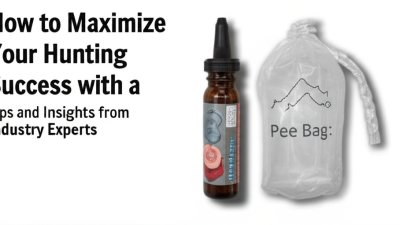
A hunting pee bag is a portable collection pouch designed for urinating discreetly in the field. It typically uses a wide opening, a leak-resistant pouch, and a closure that helps contain liquid until it can be emptied or disposed of properly.

The average adult bladder commonly holds about 300–500 mL before urination. Generic field-bag capacities often range from approximately 500 mL to 1,500 mL, so users should choose a size that provides enough reserve capacity and follow local waste-disposal rules.

How It Works: Funnel, One-Way Valve, and Leak-Resistant Storage

A hunting pee bag is a compact sanitation tool for remote outdoor use. The U.S. Fish and Wildlife Service reported 14.4 million American hunters in its 2022 National Survey. That scale shows why portable, private waste management deserves practical attention. The bag normally uses a wide funnel, allowing a user to urinate without removing heavy clothing or crouching in poor terrain. A textured rim can improve stability, although fit differs between users.

Inside the outlet, a one-way valve lets liquid move downward but limits backflow. This matters when the bag lies in a pack or vehicle. A reliable valve should open with low pressure and close quickly after use. Some designs pair it with absorbent material, reducing sloshing and odor. Still, a valve is not a guarantee. Twisting, freezing, or overfilling can weaken its performance.

Leak-resistant storage depends on several details: heat-sealed seams, a strong closure, and enough empty space for movement. The U.S. Environmental Protection Agency’s waste-reduction guidance emphasizes preventing releases at the source, which applies here in a very literal way. Keep the bag upright when possible. Double-bagging adds protection, but it also creates more plastic waste. That trade-off deserves honest thought. Before a long hunt, test the funnel, valve, and seal with clean water. Small flaws are easier to find at home than beside a cold truck seat.

Capacity Planning: Comparing 1–2 L Bags With Typical Daily Urine Output

A hunting pee bag is a portable container designed for urinating when privacy, weather, or terrain makes a toilet unavailable. Most models use a wide opening, flexible body, leak-resistant seal, and a stable storage pouch. The process is simple: urinate into the opening, close the seal, and keep the container upright. A dark shelter, cold morning, or steep hillside can make this small tool surprisingly practical.

Capacity planning matters more than appearance. A healthy adult may produce roughly 1–2 liters of urine in 24 hours, but that figure changes with water intake, temperature, exercise, caffeine, and certain medicines. A 1-liter bag may handle a short outing, especially with normal hydration and bathroom access before departure. It can become inadequate during a long, remote hunt. A 2-liter bag offers more margin, but it may feel heavier and bulkier when stored inside clothing or a pack. Do not fill either size to the brim; movement can force liquid toward the seal.

Marking the bag’s capacity at home helps estimate real-world use. Try it with water before the trip. Check the closure while kneeling, sitting, and walking. I would carry an extra bag for long days, because planning around average output is imperfect. Keep used containers away from food, inspect for damage, and follow local waste-disposal rules. A full bag should be secured promptly, not left beside camp or exposed to wildlife.

Materials and Design: TPU, PE Films, Seams, and Odor-Control Features

A hunting pee bag is a compact container for urinating discreetly during long hours outdoors. Its material choices determine comfort, strength, and leak resistance. TPU, or thermoplastic polyurethane, feels flexible and rubber-like. It bends easily inside a pack and resists small punctures better than thin film. However, TPU can feel sticky in freezing weather, so storage conditions matter.

PE film is lighter and usually more affordable. It offers useful moisture and chemical resistance, but very thin PE may split under force. The strongest designs often use thicker film or layered construction. Seams deserve close attention. Heat-welded seams create a continuous barrier, while weak corners can fail when the bag is overfilled. I prefer a wide opening, a stable closure, and enough capacity for realistic field use. Small details matter.

Odor control may come from absorbent polymer, activated carbon, or odor-neutralizing additives. Absorbent material turns liquid into a gel, reducing movement inside the bag. Carbon can help limit unpleasant smells, although it cannot remove every odor. A secure closure still matters more than marketing claims. In cold, windy conditions, I have found that handling becomes slower and less precise. No design is perfect. A pee bag should be tested at home with water before entering remote terrain, and it should be packed with tissues and a sealable disposal pouch.

What Is a Hunting Pee Bag and How Does It Work? – Materials and Design: TPU, PE Films, Seams, and Odor-Control Features

Design Dimension Common Material or Feature How It Works Practical Advantages Important Limitations
Primary Function Portable urine-collection pouch Collects urine in a flexible, leak-resistant container so the user can relieve themselves without leaving a visible wet spot or unnecessary scent trail. Useful in a ground blind, tree stand, vehicle, or remote field location where leaving the position is inconvenient. It does not replace responsible waste handling; a used bag should be sealed and disposed of according to local regulations.
Inner Fluid Barrier TPU film or PE film A continuous polymer film forms the liquid-holding layer. Thermoplastic polyurethane (TPU) is elastic and abrasion-resistant, while polyethylene (PE) is widely used as a lightweight moisture barrier. Both materials can provide low liquid permeability when properly manufactured and sealed. Performance depends on film thickness, formulation, temperature, puncture resistance, and the quality of the seams.
TPU Construction Thermoplastic polyurethane TPU can be heat-welded or radio-frequency welded, creating a flexible thermoplastic structure without relying solely on stitched thread. Good flexibility, soft handling, and resistance to repeated bending. It can also be formulated for improved abrasion or tear resistance. TPU products are often more expensive than simple PE-film products and may degrade if exposed to unsuitable chemicals, heat, or prolonged ultraviolet light.
PE Film Construction Low-density or linear low-density polyethylene film PE film provides a lightweight, chemically resistant layer that can be joined by heat sealing to create the pouch body. Low cost, low weight, and good resistance to water and many common chemicals. Thin PE film can be more vulnerable to punctures, tearing, cold-related stiffness, and stress at poorly made seals.
Outer Support Layer Coated textile, laminated film, or reinforced polymer layer The outer layer protects the liquid barrier from abrasion and helps the pouch maintain its shape during handling. Improves grip, durability, and resistance to contact with clothing, equipment, or rough surfaces. Additional layers can increase bulk, cost, and disposal complexity.
Seam Design Heat-sealed, ultrasonic-welded, or RF-welded seams Heat and pressure fuse compatible thermoplastic layers together, forming a continuous joint around the pouch perimeter. A properly made welded seam can reduce leakage paths compared with a simple sewn seam through a liquid barrier. Overheating can weaken or distort film, while insufficient heat or pressure can produce an incomplete seal.
Closure System Zip closure, adhesive strip, screw cap, or fold-over seal The opening is closed after use to limit spills and reduce the release of volatile odor compounds. A wide opening supports easier filling, while a secure closure improves transport and temporary storage. Closures may become contaminated or fail if overloaded, improperly aligned, or repeatedly reused beyond their intended design.
Absorbent Interior Superabsorbent polymer (SAP) pad or granules SAP absorbs water from urine and converts much of the liquid into a swollen gel, reducing free liquid inside the pouch. Helps reduce sloshing and lowers the risk of leakage after the pouch is closed. Absorbency is limited by the amount and distribution of SAP. The pouch can still leak if it is overfilled or punctured.
Odor-Control Feature Activated carbon, odor-adsorbing layer, or odor-neutralizing additive Activated carbon can adsorb some odor molecules, while other additives may bind or neutralize selected odor compounds. Can reduce odor intensity inside the sealed pouch and during short-term handling. Odor control is not absolute. Temperature, fill volume, closure quality, storage time, and the chemistry of the contents affect performance.
Leak-Resistance Features Rounded corners, reinforced edges, double seals, and leak-tested joints These features reduce stress concentrations and provide additional protection at locations most likely to experience pressure or bending. Improves reliability when the pouch is carried in a pack or clothing pocket. No flexible pouch is puncture-proof; contact with sharp equipment can compromise any barrier.
Typical Capacity Approximately 500–1,000 mL for many portable designs Capacity is selected to balance practical collection volume with portability and manageable weight. A larger capacity can reduce the need for immediate disposal during a long outing. Actual capacity varies by design. Overfilling increases pressure on seams and the closure, so the stated limit should be followed.
Field Handling Flexible body with a wide, stable opening The opening guides liquid into the pouch, while the flexible body can be folded or compressed after closure. Supports discreet use and compact temporary storage. Poor positioning, movement, or inadequate support can cause spills during use.
Disposal and Hygiene Single-use or limited-reuse construction After sealing, the used pouch should be placed in a secondary leak-resistant bag when appropriate and transported to a suitable disposal point. Reduces direct contact with liquid and supports cleaner field practices. Do not abandon used bags outdoors. Disposal requirements differ by location, and reusable versions require thorough cleaning and drying.
Key takeaway: A hunting pee bag combines a liquid-barrier film, sealed seams, a secure closure, and optional absorbent or odor-control components. Reliability depends on the complete system rather than on any single material.

Hygiene and Disposal: Cleaning, Drying, and Leave-No-Trace Practices

A hunting pee bag is a portable container designed for urination when privacy, weather, or terrain makes a normal toilet impractical. It usually has a wide opening, a leak-resistant seal, and an absorbent layer or gel. Keep it upright, away from food, clothing, and sleeping equipment. Before entering the field, inspect the seams and closure. A tiny crack can become a serious mess in a backpack. Hygiene starts with clean hands and a small supply of unscented wipes or water.

After use, seal the bag firmly and place it inside a second leak-resistant pouch. Carry it out instead of burying it or hiding it under leaves. Local waste rules may differ, so follow the disposal guidance for your area. Reusable bags need careful washing with mild soap and clean water. Rinse around the opening and threads, where residue often remains. Let every part air-dry completely before storage. Moisture trapped in a dark pouch can create unpleasant odors and microbial growth. Never store a damp bag.

A practical mistake is assuming that a bag looks clean because it has no visible residue. I would still wash it. Strong chemicals may damage seals or leave harmful traces, so avoid them unless the manufacturer’s instructions allow their use. Keep used wipes, liners, and gloves with the sealed waste. Leave the ground, vegetation, and water sources untouched. That small discipline matters more than convenience.